OBBC — Open Bible Baptist Church

The OBBC Digital Platform is an ongoing website and digital communications project focused on managing the church’s WordPress site, coordinating Facebook announcements, and tracking user engagement through Google Analytics and Looker Studio. The platform was designed to provide clear, accessible information for a predominantly middle-aged and senior congregation, while supporting weekly updates, event communication, and ongoing performance monitoring.

Year

2025 - Present

Tools & Execution

Tools I used
  • WordPress
  • Elementor
  • Meta Business Suite
  • Buffer
  • Google Analytics 4
  • Adobe Photoshop
  • Adobe Illustrator
  • Canva
What I did

1. Website Redesign & Structure Optimization

Redesigned the church website layout using WordPress and Elementor to simplify navigation and content hierarchy for a predominantly middle-aged and senior congregation across desktop and mobile devices.

2. Content Management & Visual Asset Creation

Created and managed visual content for website sections and Facebook posts, supporting weekly announcements, event promotions, and ministry updates.

3. Digital Platform Setup, Performance Tracking & Reporting

Implemented Google Analytics 4 to track page engagement and user behavior, and created performance reports in Looker Studio to monitor traffic trends and content effectiveness.

4. Ongoing Website & Marketing Operations

Maintained and updated the WordPress website with weekly announcements, event information, and ministry updates, supporting ongoing communication across the website and Facebook.

Research

Needs & Goals

OBBC’s digital platform project focused on improving how church members access essential information such as service times, events, and announcements through a clearer and more accessible website structure.

From a practical execution perspective, the goal was to redesign and manage the church website using WordPress and Elementor, support weekly communication through Facebook, and implement performance tracking with Google Analytics and Looker Studio.

The project aimed to build a simple, reliable digital system that supports weekly content updates, event promotion, and donation information, while remaining easy to navigate for a predominantly middle-aged and senior congregation.

Target Audience

Age Range: 30 - 80
Gender: Female & Male
Location: Alymer
Audience Profile: Primary audience includes retired seniors, middle-aged couples with children, and young families within a small, conservative Baptist community in Aylmer. The congregation represents a multi-generational community with varying levels of digital literacy, requiring inclusive communication strategies that support both traditional and digitally active members.
Psychographics: Members value clear, familiar communication patterns and prefer simple, easy-to-read layouts. Many rely on Facebook for announcements and use the website primarily to check service times, events, and contact information.
Strategy & Digital Planning

Digital Strategy Focus

The digital strategy for OBBC was intentionally designed for a predominantly middle-aged to senior congregation, many of whom have limited digital familiarity and prefer straightforward, predictable interactions.

Rather than introducing complex navigation or dense layouts, the website was structured around simple, clearly labeled sections such as service times, events, ministries, and contact information. Using WordPress and Elementor, repeatable section layouts were created so that weekly announcements and essential details always appeared in familiar positions.
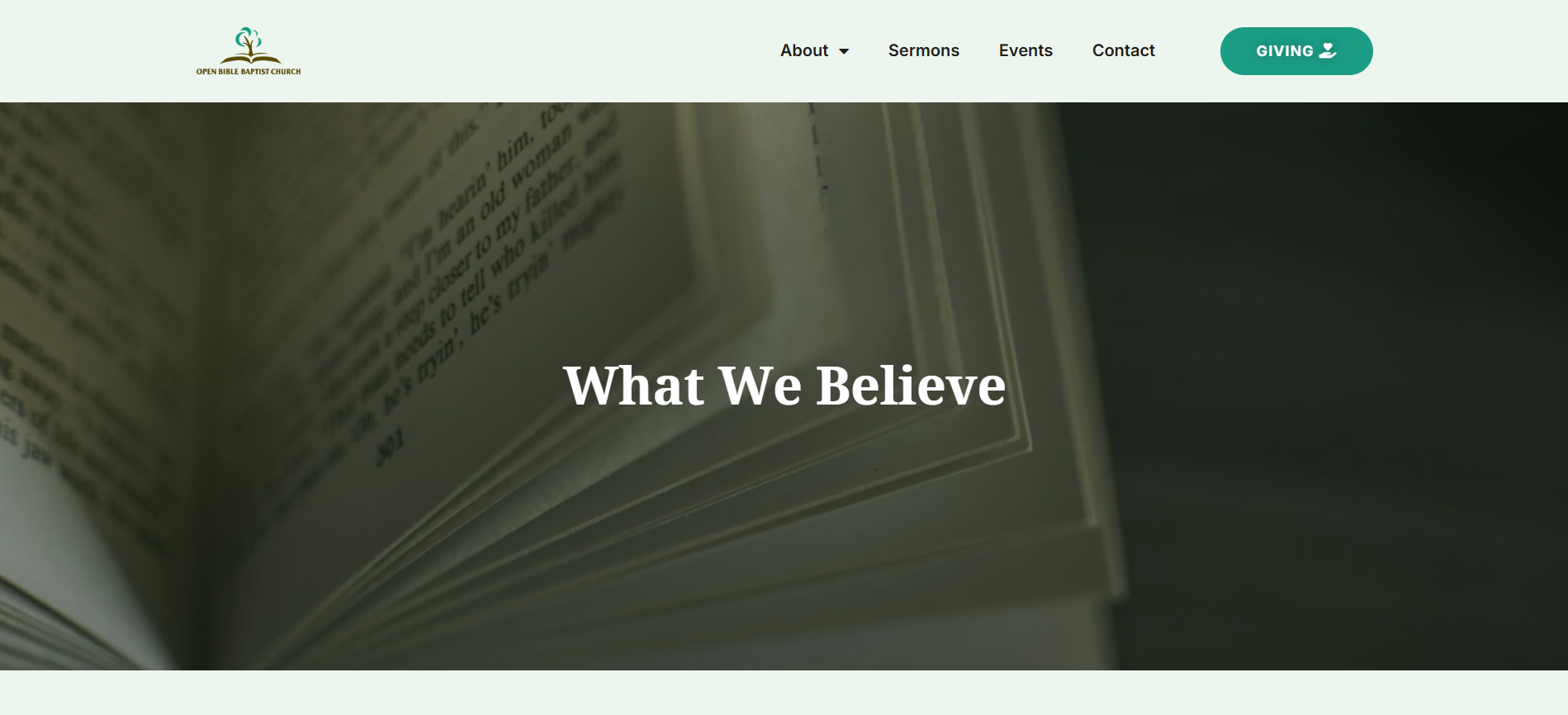
As shown in the layout, key information blocks follow a consistent visual structure, allowing users to quickly locate important details without needing to relearn the interface.

Platform-Level Thinking

OBBC’s digital presence was structured around the communication habits of its congregation, with a simple platform structure built on tools already familiar to middle-aged and senior members.
Website (WordPress)
Served as the central hub for official information, including service times, ministries, events, donations, and contact details.
Social Media (Meta Business Suite, Buffer)
Functioned as the primary communication channel for a predominantly middle-aged and senior audience, reinforcing announcements, promoting events, and directing users to the website.
Analytics (Google Analytics 4)
Used to monitor how members interacted with key pages such as service information, events, and contact sections, and to evaluate how effectively the site supported engagement.

Website Management & Structure

WordPress-Based Site Management & Structure

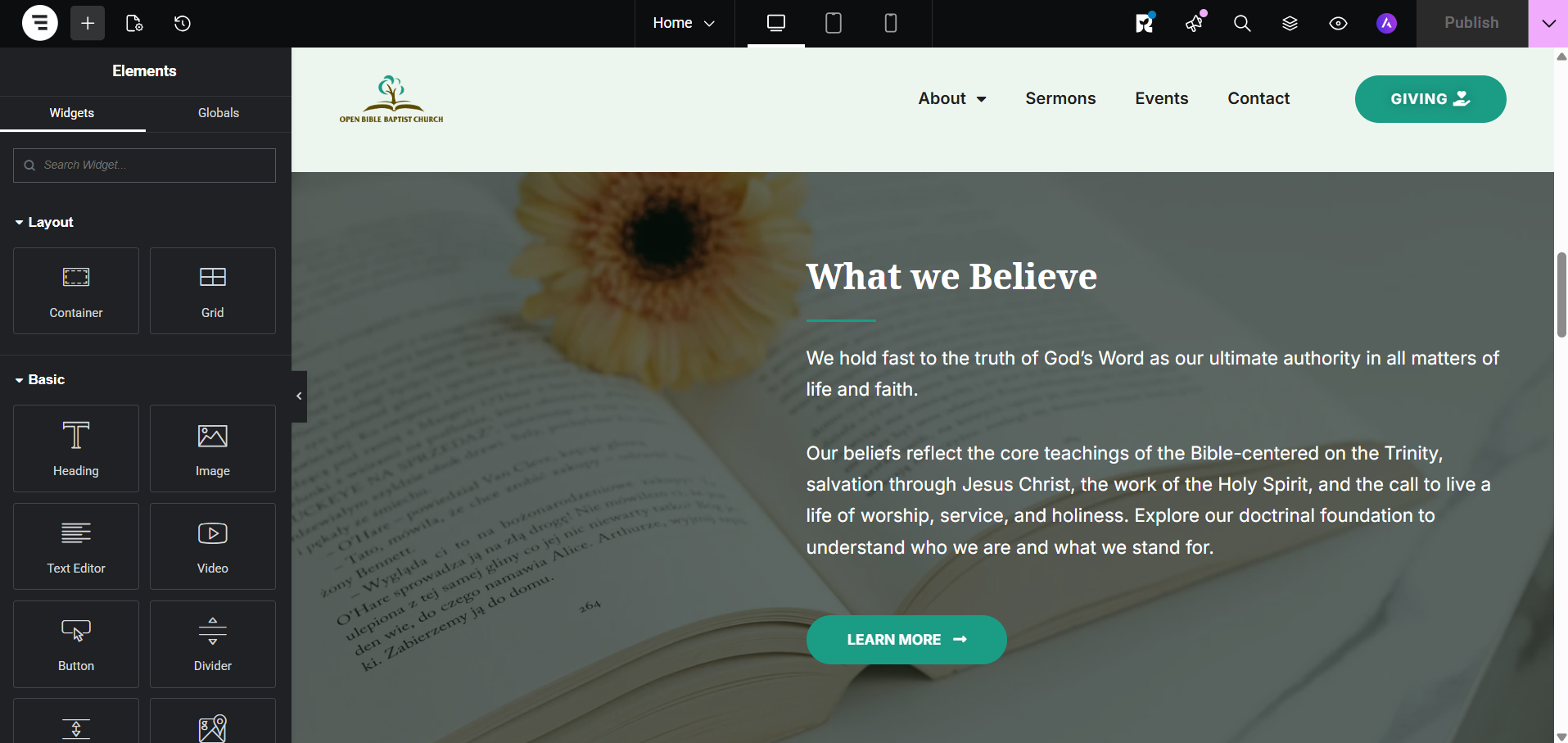
Page built by Elementor builder
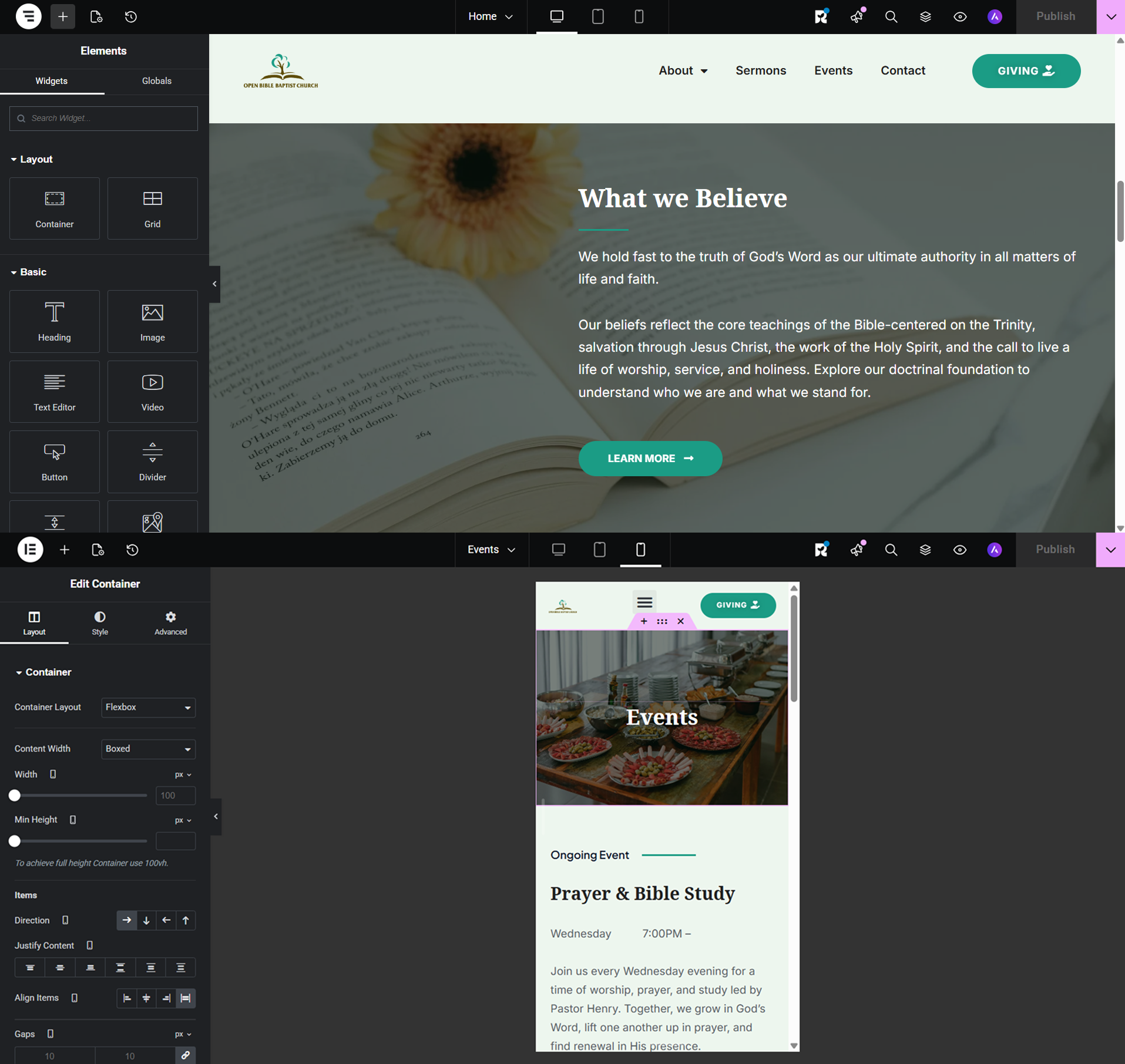
The OBBC website was managed and updated using WordPress with Elementor, as shown in the page builder interface. This setup allowed pages such as service information, announcements, events, and the about menu to be edited without advanced technical knowledge. Reusable section layouts were created so that weekly announcements, events, and ministry updates could be added quickly while maintaining a consistent structure across the site.

Content Structure & Page Updates

Home
Announcements
What We Believe
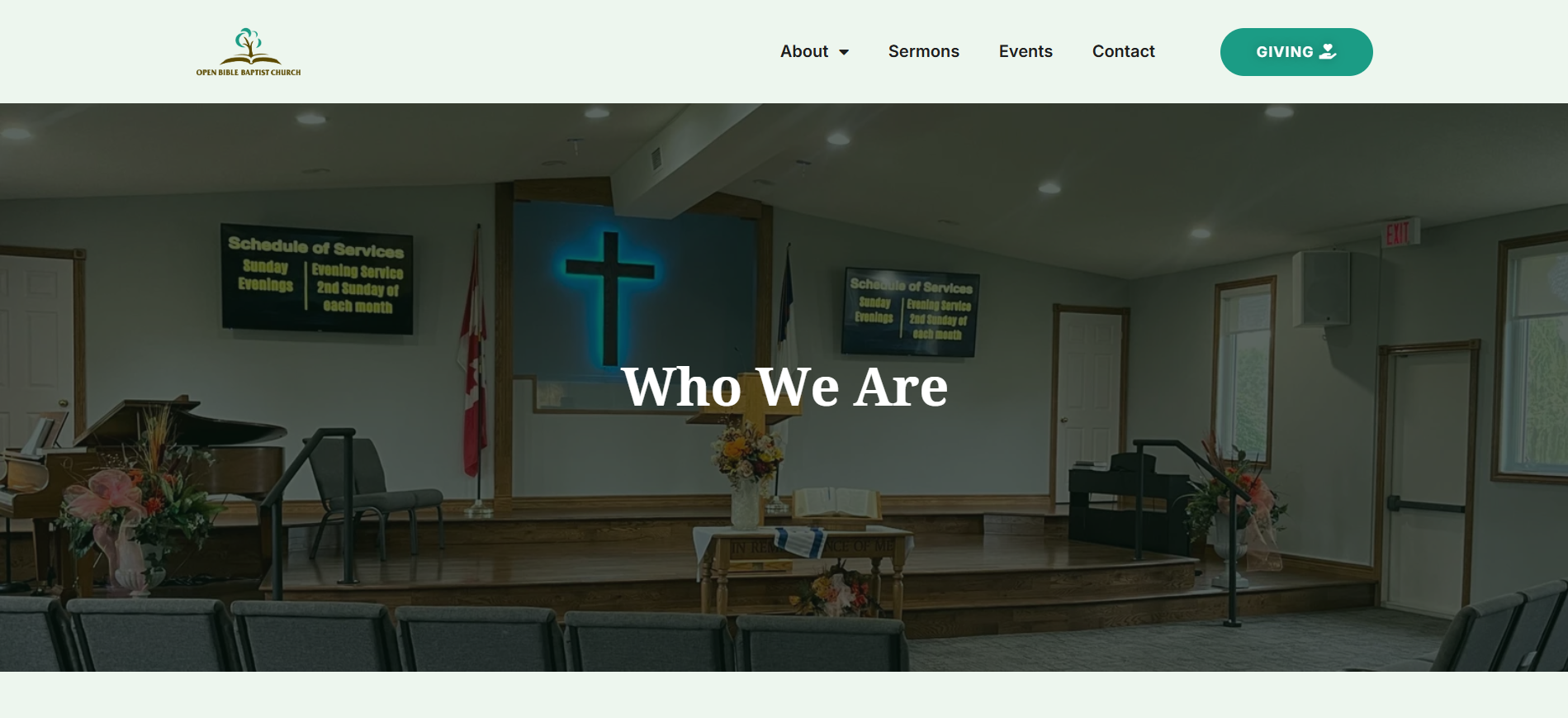
Who We Are
Sermons
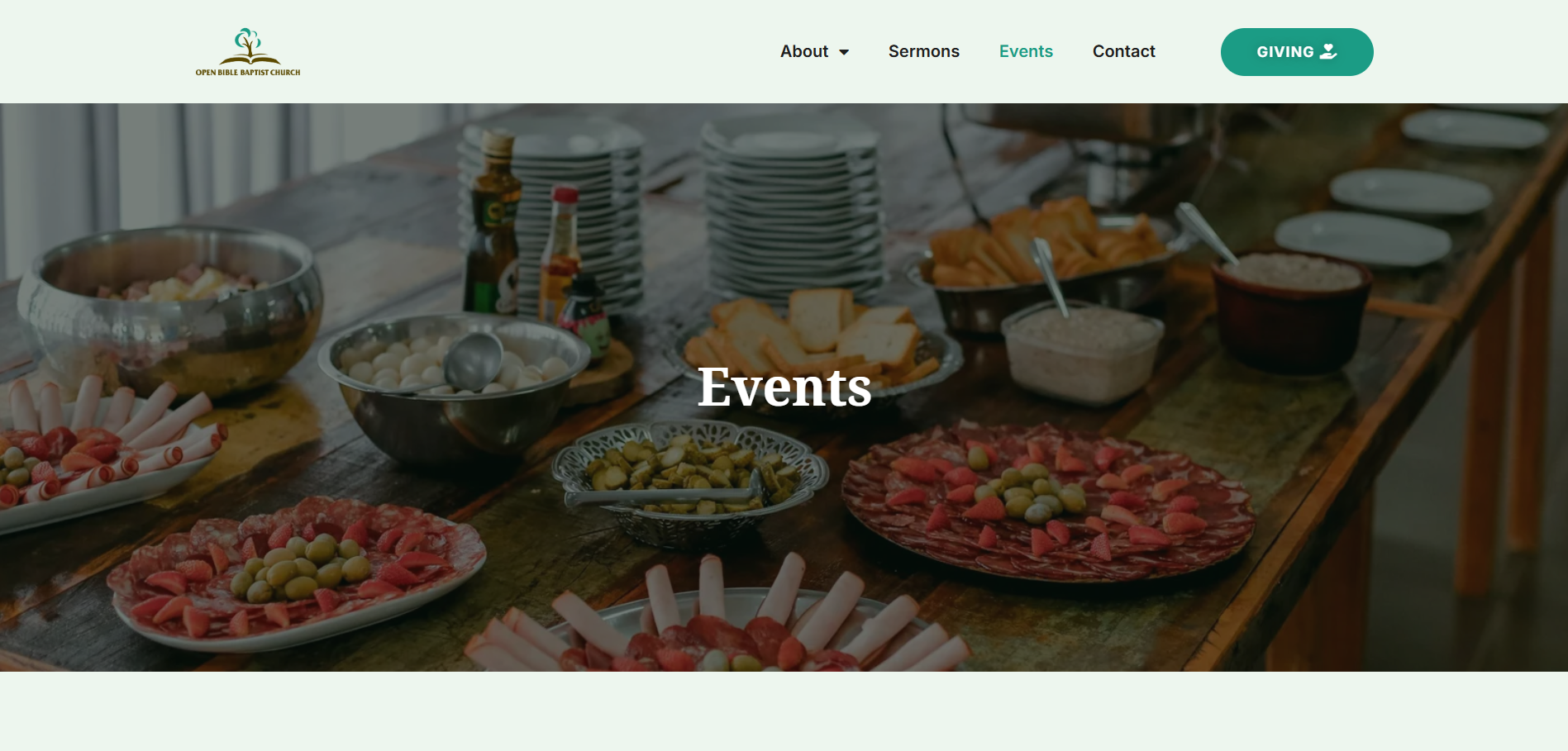
Events
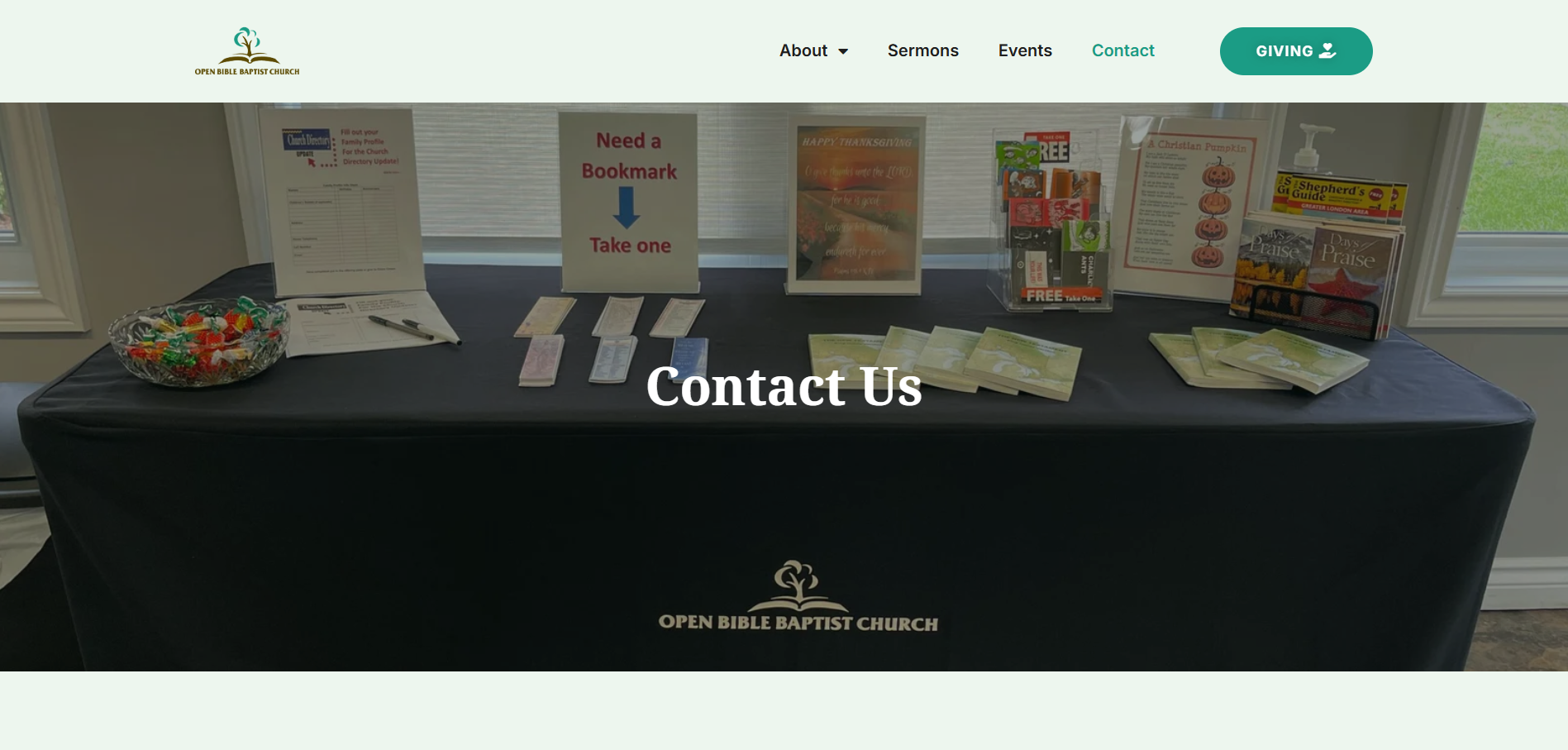
Contact Us
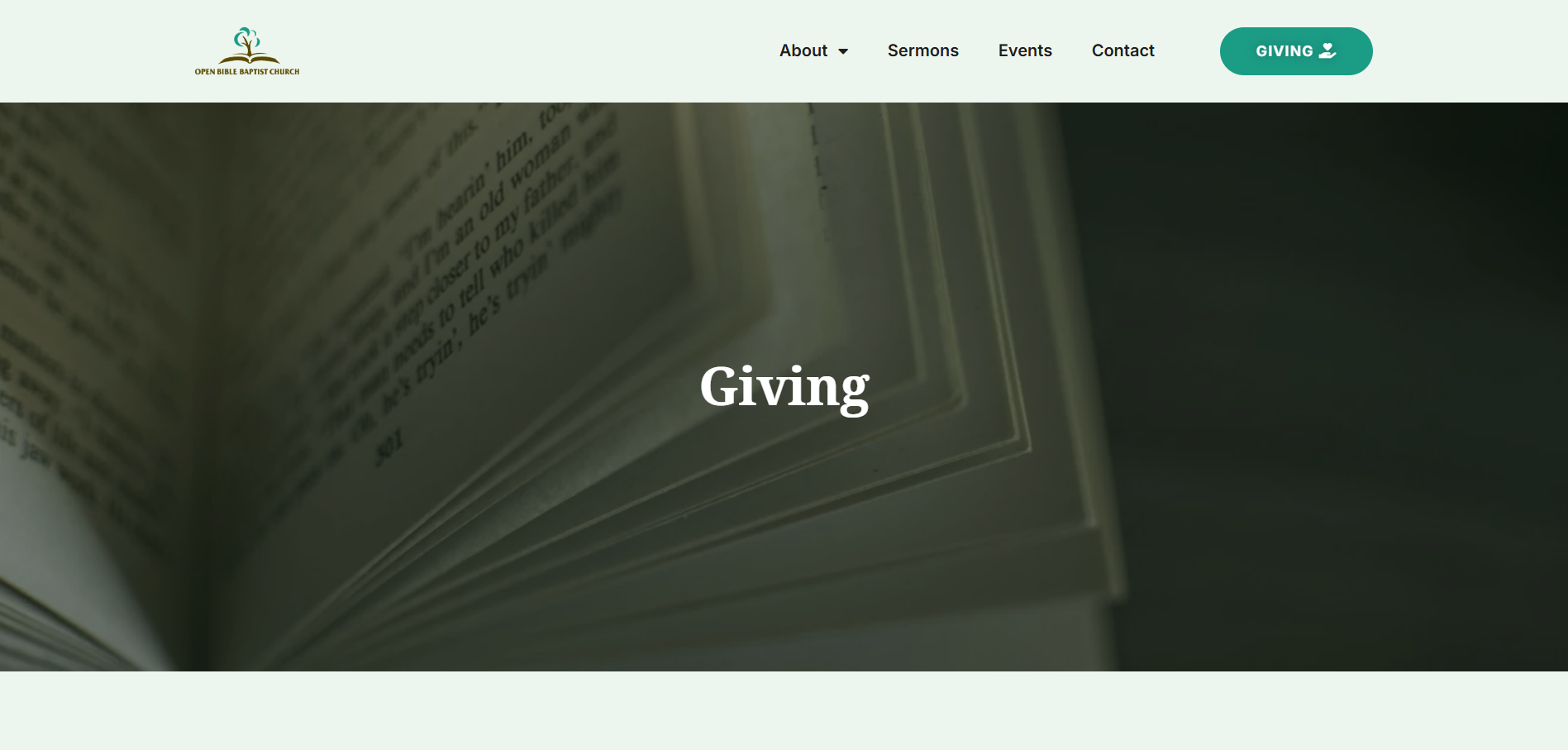
Giving
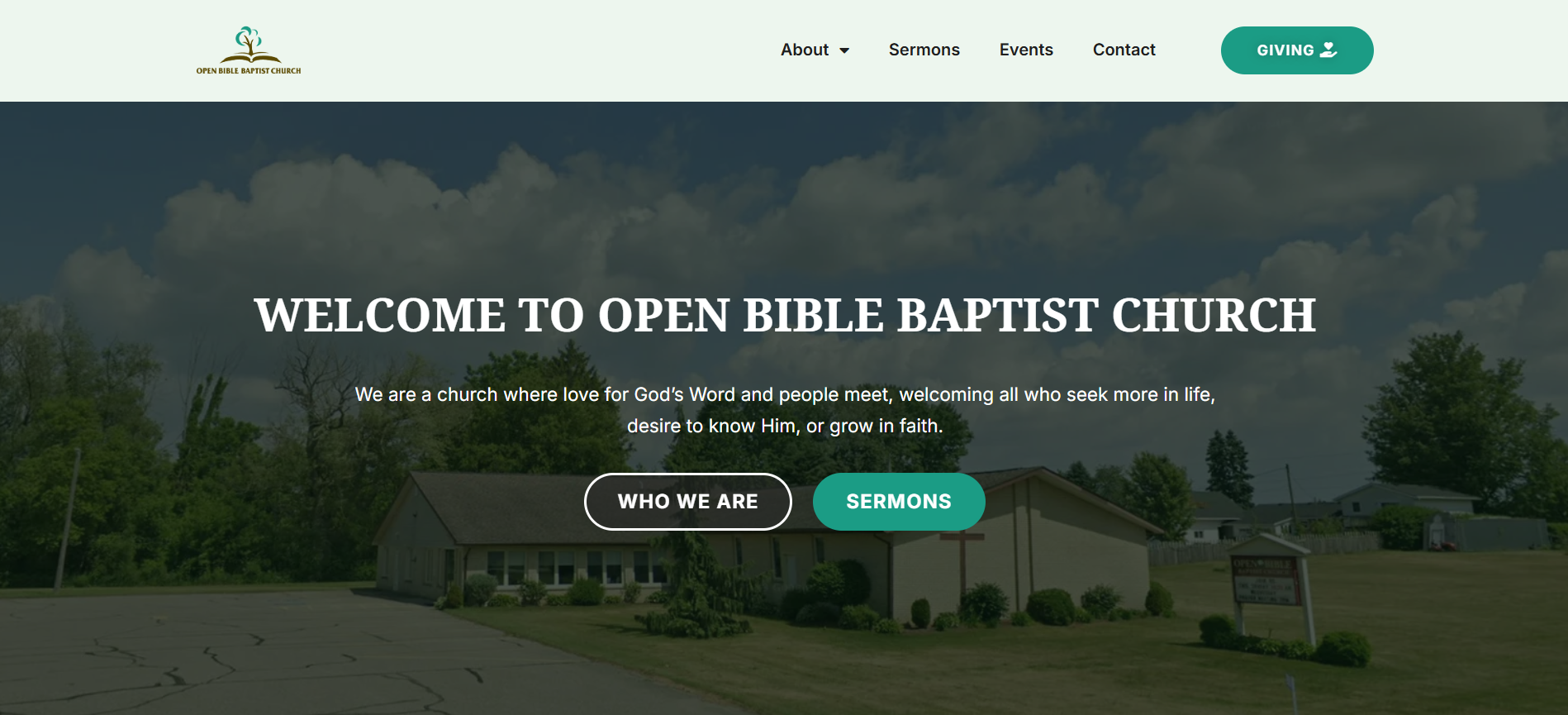
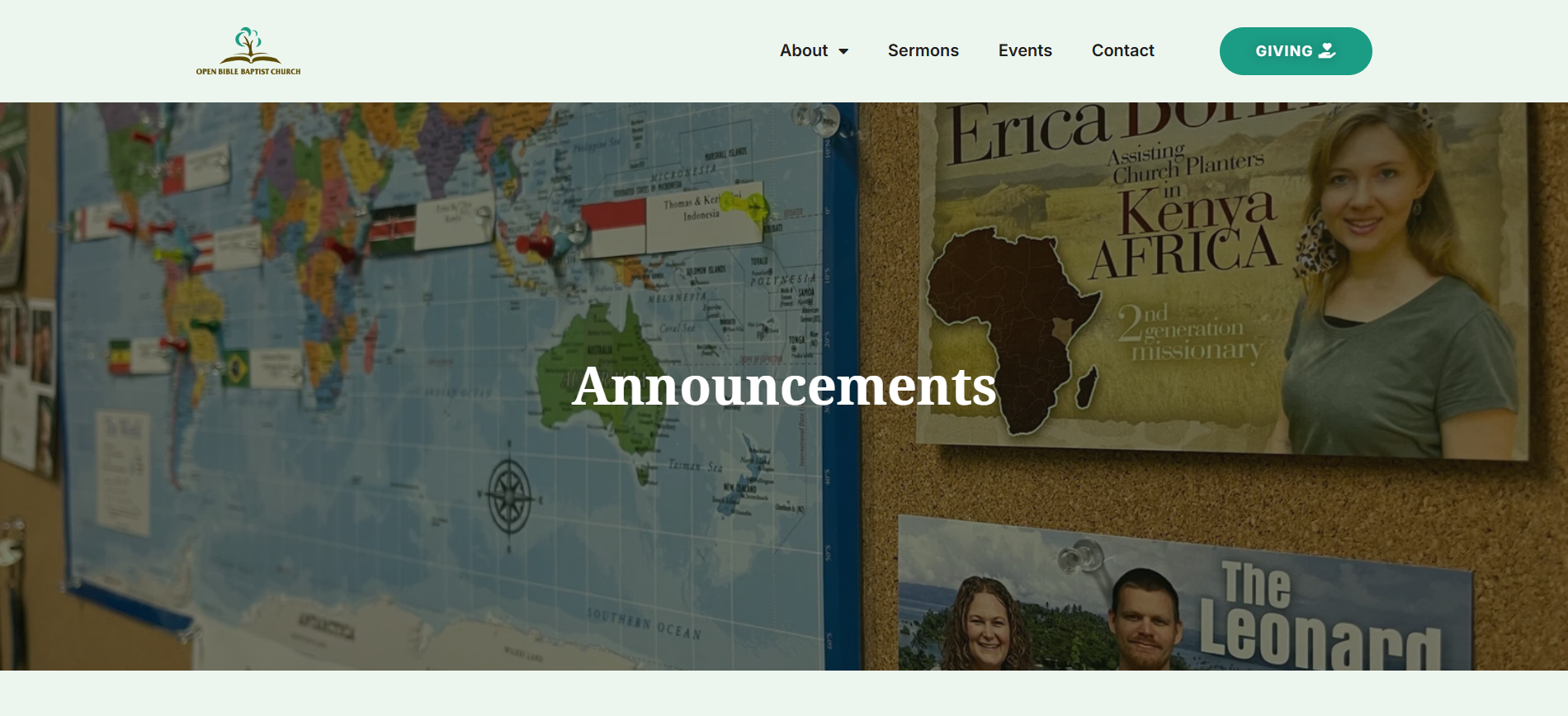
As shown in the page previews, core pages such as Home, Announcements, What We Believe, Who We Are, Sermons, Events, Contact Us, and Giving were structured to prioritize clarity and ease of navigation. These pages were updated regularly to reflect weekly announcements, upcoming events, sermon content, and ministry information.
Social Media Communication

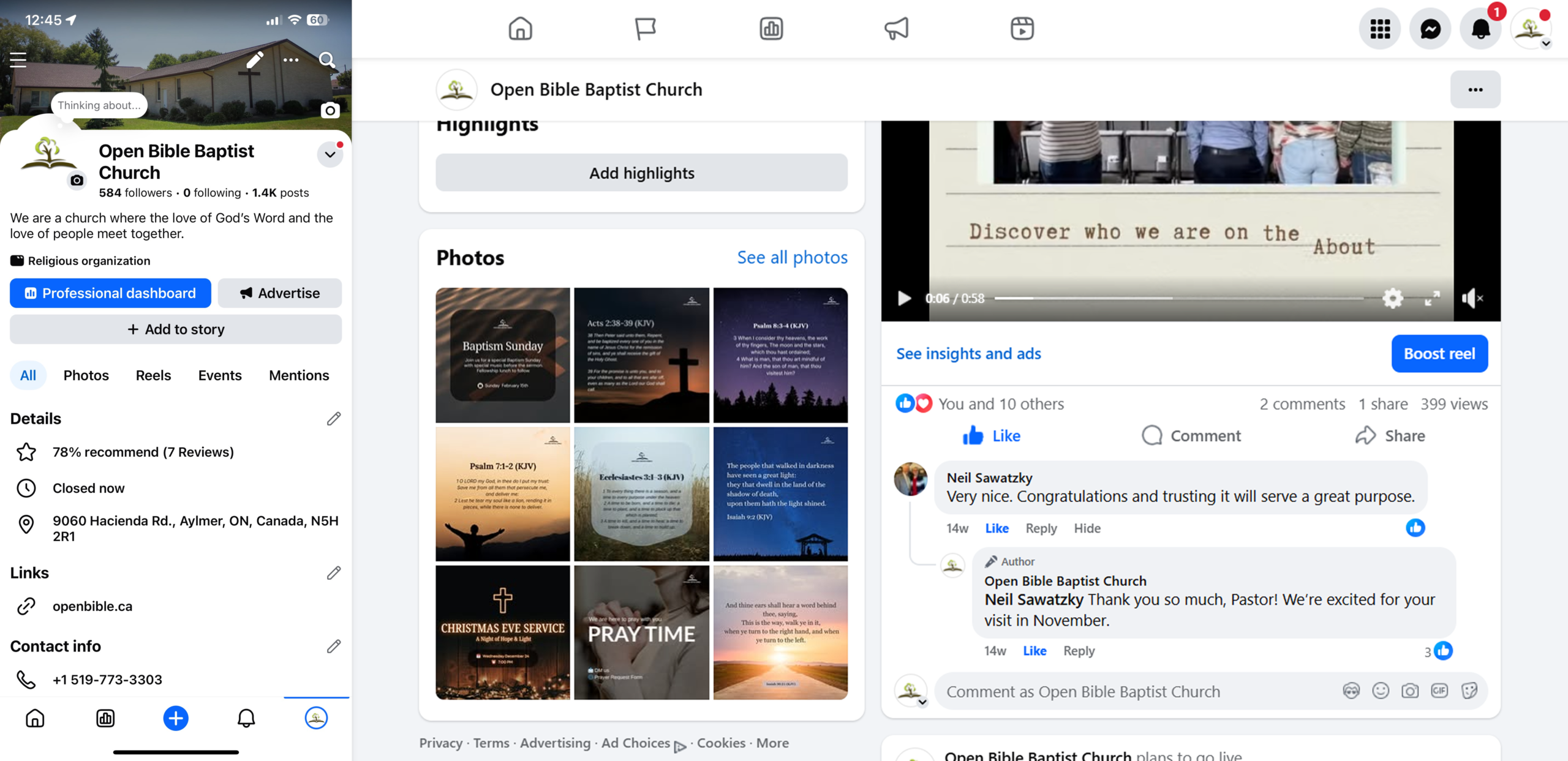
Facebook as the Primary Social Channel

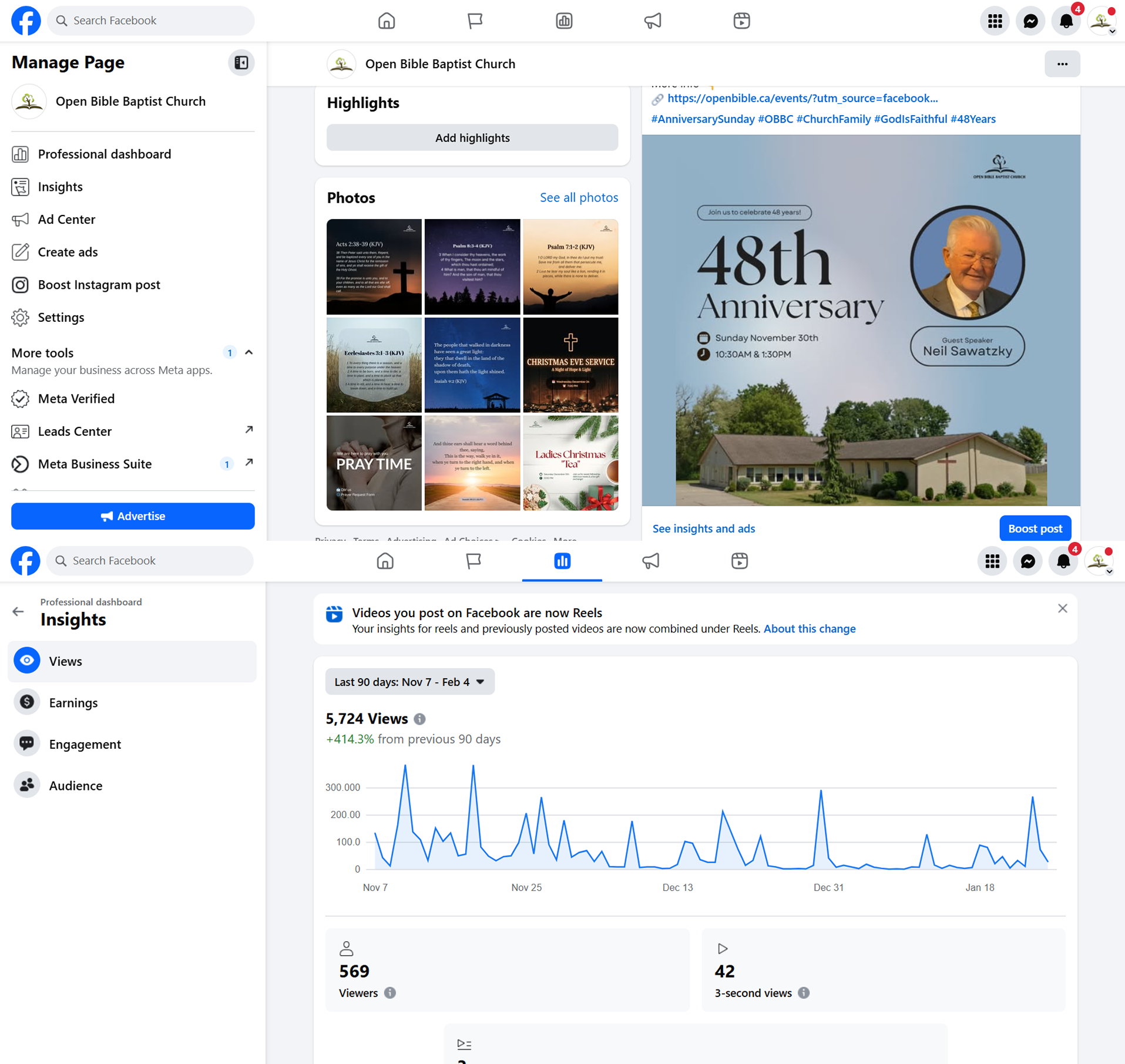
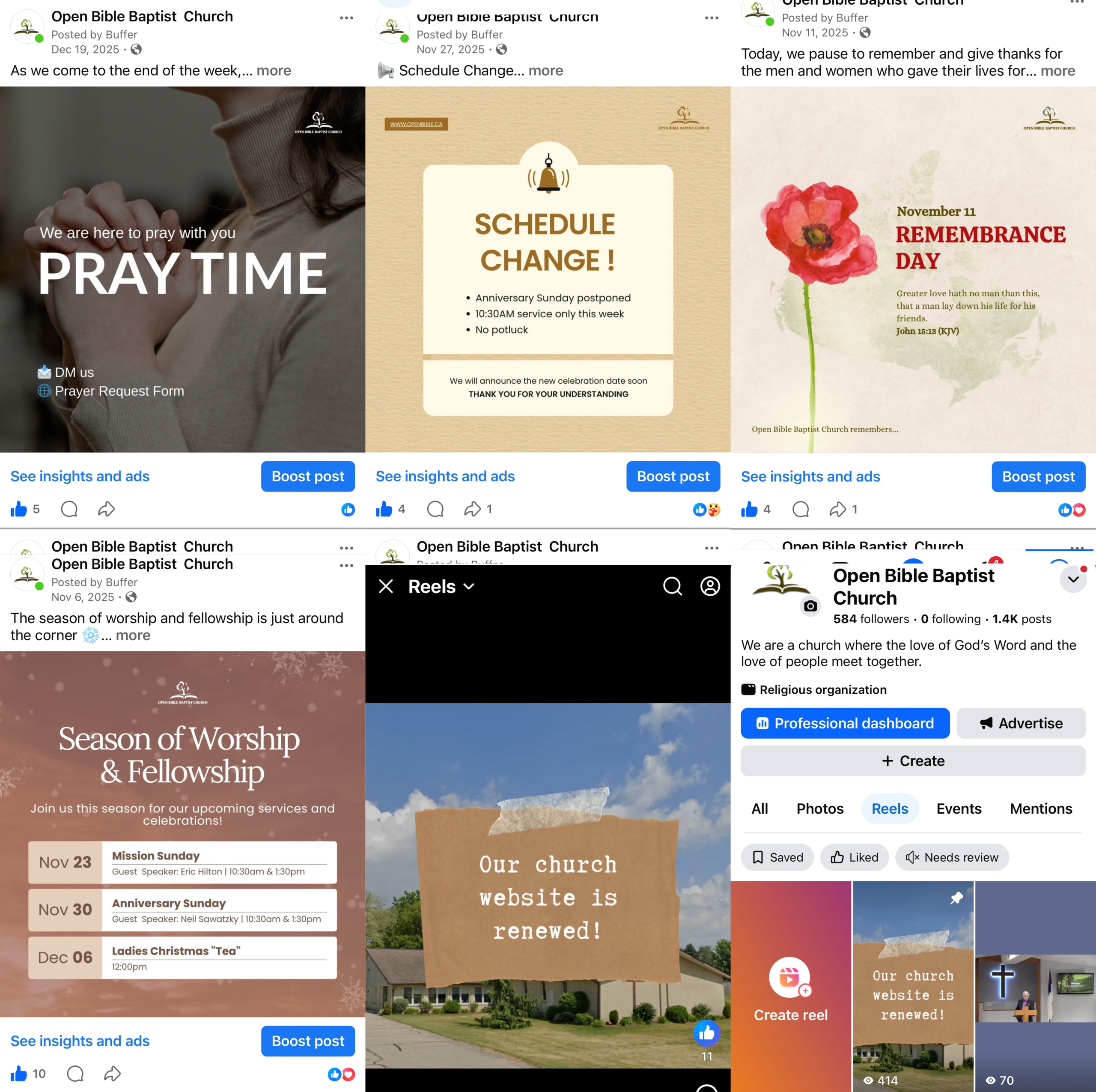
Because the congregation consists largely of middle-aged and senior members, Facebook was used as the primary social platform. As shown in the page interface, it served as a familiar and accessible channel for announcements, reminders, and event promotions. Rather than focusing on high-volume content, the Facebook page was used for clear, timely communication that supported church activities and directed users back to the website for full details.

Platform Roles: Meta Business Suite & Buffer

Facebook communication was managed through a simple two-tool workflow, separating content scheduling and performance monitoring. Buffer was used to schedule weekly announcements and event reminders, while Meta Business Suite was used to monitor engagement and evaluate post performance over time.
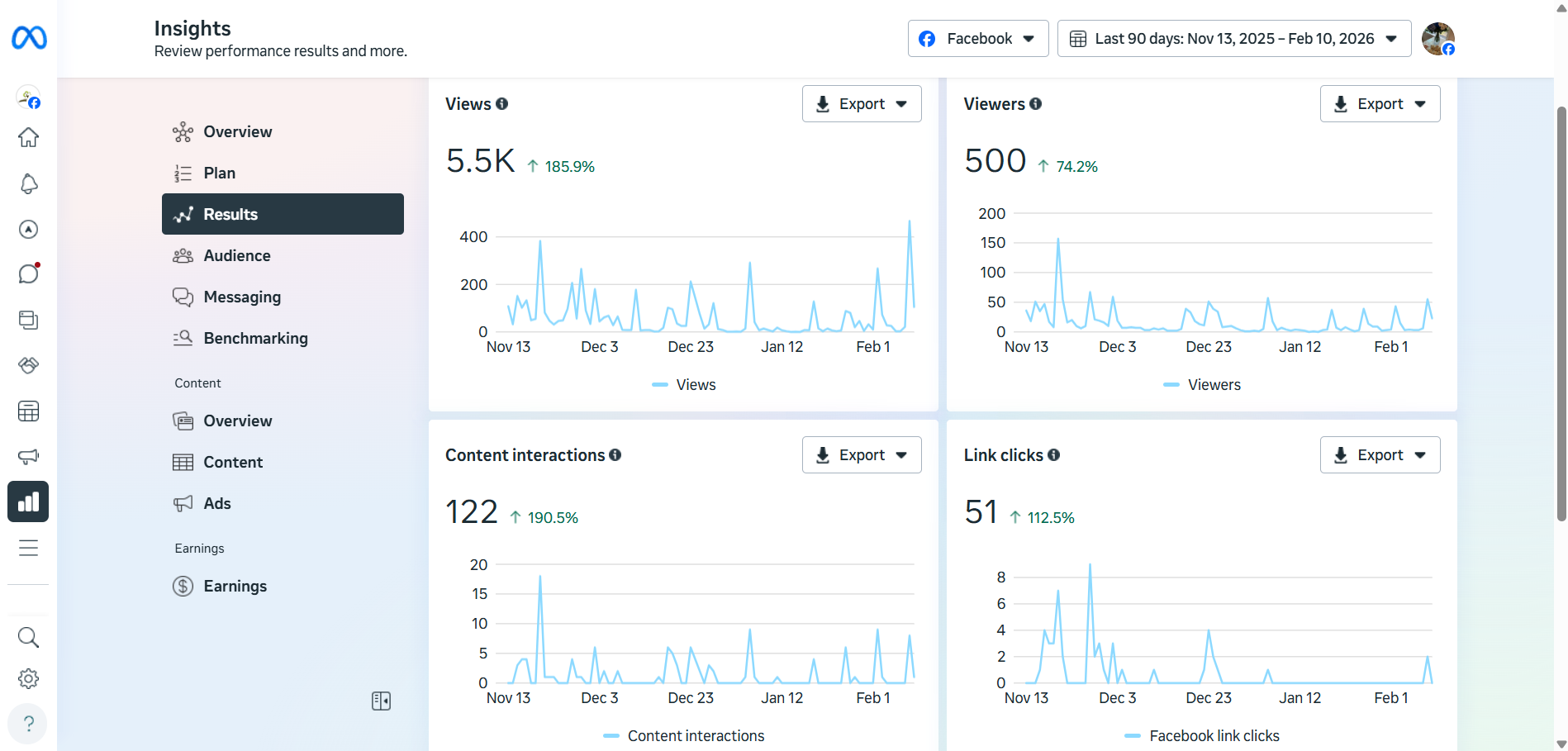
Meta Business Suite
Used to monitor Facebook page performance, engagement trends, and link interactions. As shown in the insights dashboard, metrics such as views, content interactions, and link clicks were reviewed to understand how announcements and event posts were performing over time.
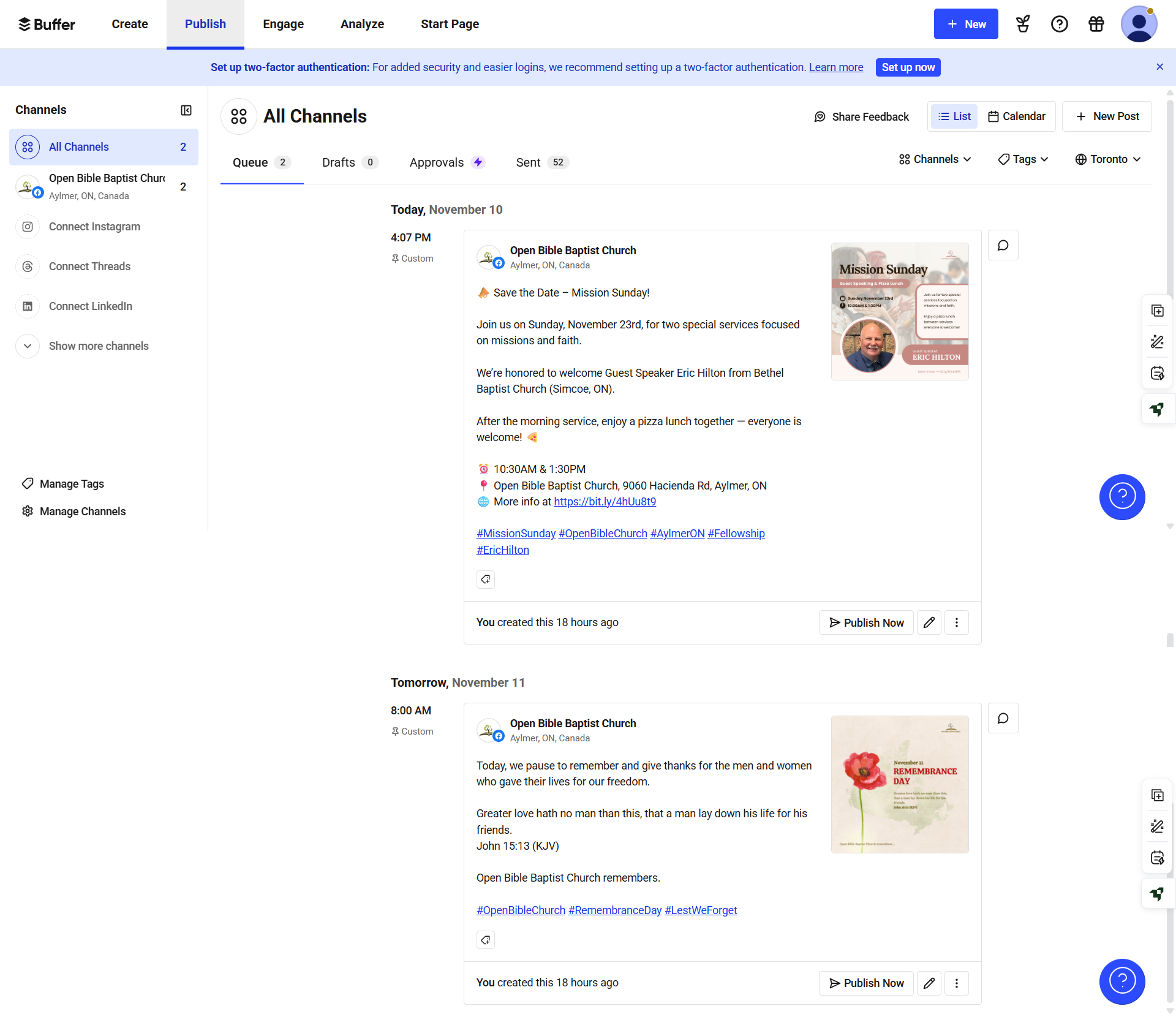
Buffer
Used primarily for scheduling Facebook posts in advance. The publishing dashboard allowed weekly announcements, event reminders, and ministry updates to be queued and released at scheduled times, helping maintain a consistent communication rhythm.

Type of Content Management

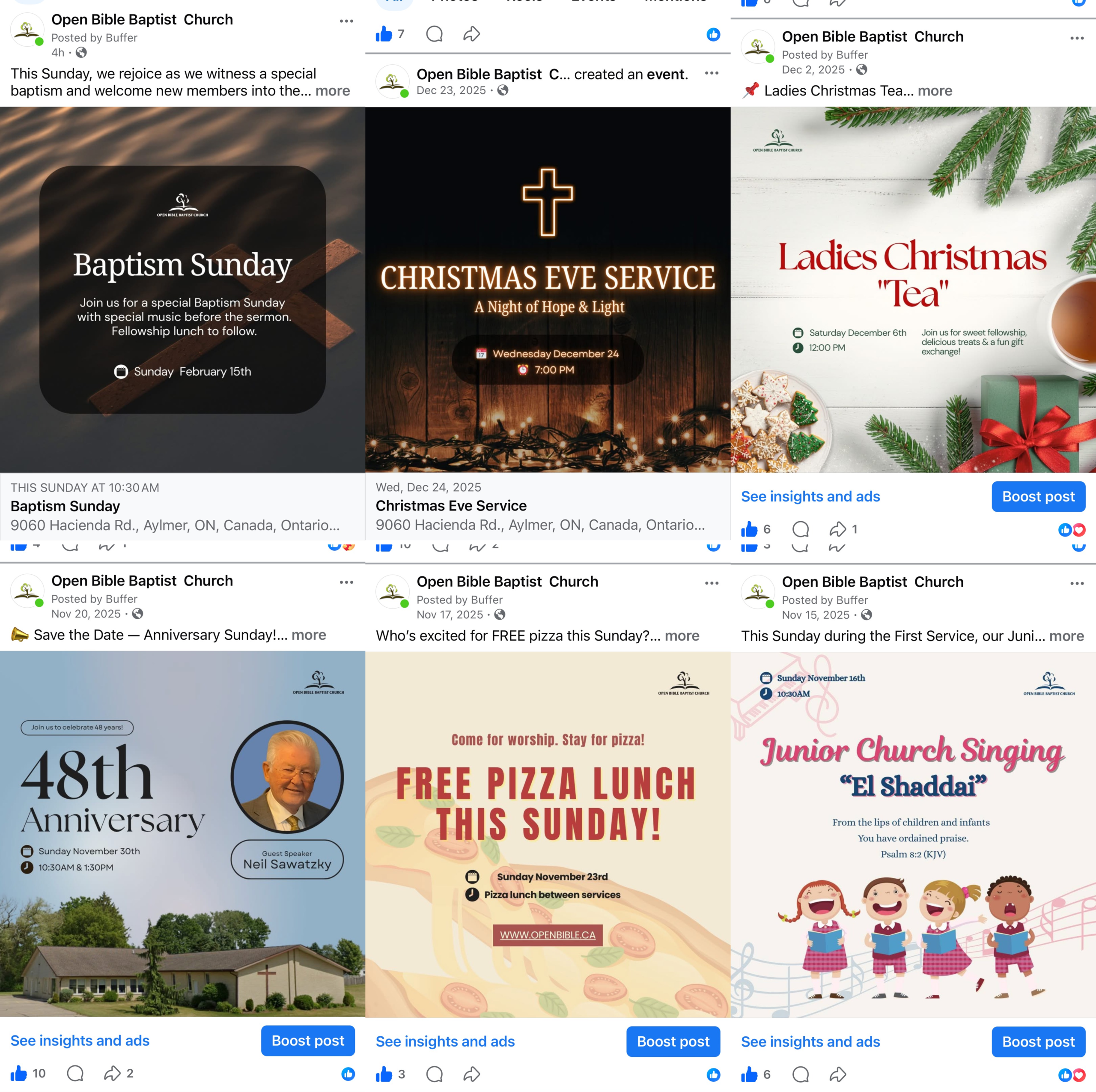
Social media content was focused on practical communication needs rather than promotional campaigns. Posts were created to support weekly church activities, share time-sensitive updates, and guide users to the website for more detailed information. Content was designed using Adobe Creative Suite and Canva, maintaining a simple, readable layout that suited the church’s primarily middle-aged and senior audience.
Event Announcements
Included posts for baptisms, special services, fellowship lunches, and seasonal events. Each post contained a UTM-tracked link to the website to encourage event sign-ups and drive traffic between Facebook and the site.
General Announcements & Community Engagement
Used for schedule changes, prayer requests, reminders, and weekly updates. These posts helped maintain consistent communication with members, supported community engagement, and ensured important information reached users who primarily rely on Facebook for church updates.
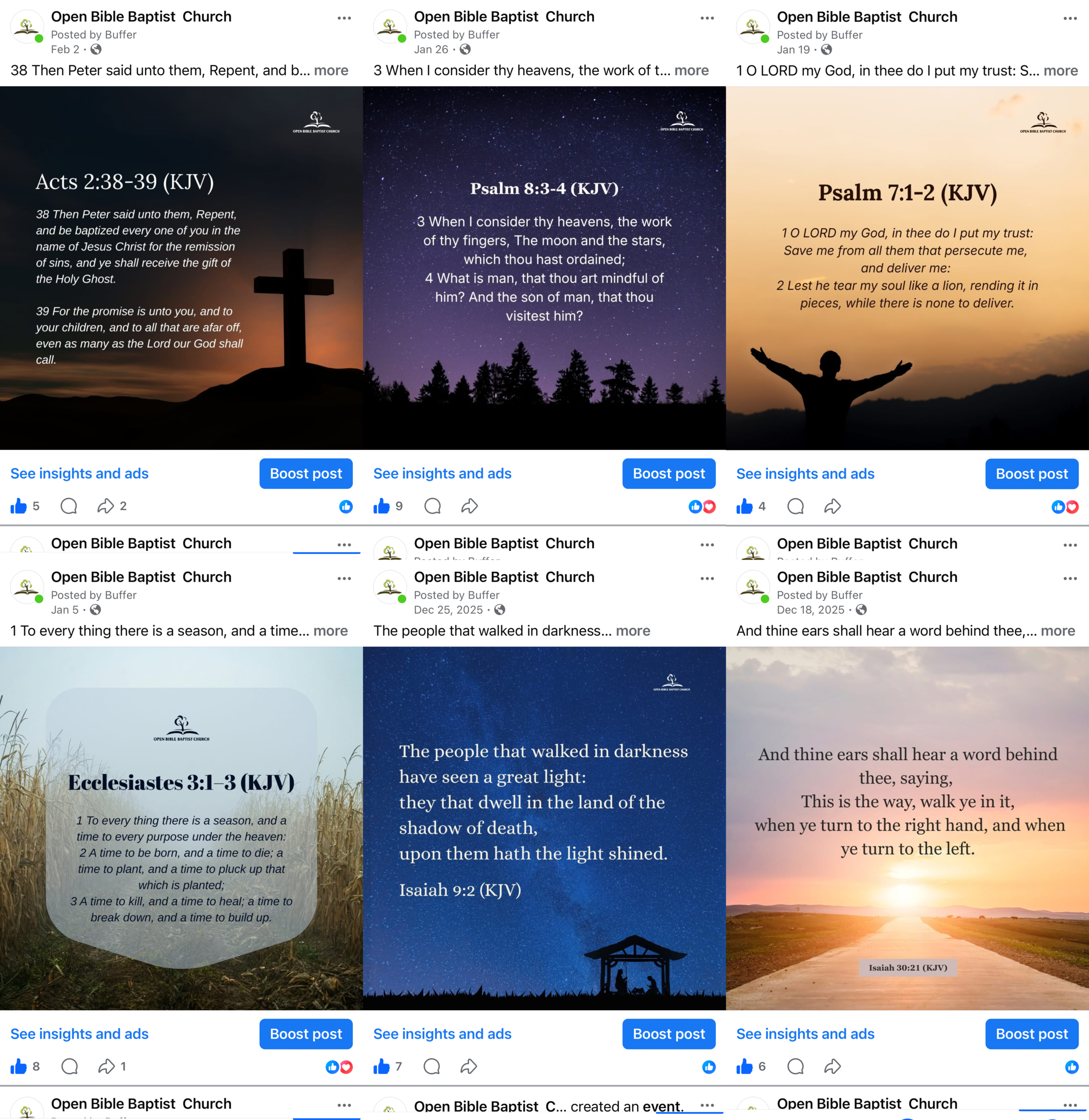
Weekly Scripture Posts
Weekly scripture graphics were shared regularly to provide simple, encouraging content for the congregation. As shown in the post examples, each design used clear typography and high contrast to ensure readability for middle-aged and senior members.

Analytics & Tracking

Google Analytics 4 Implementation

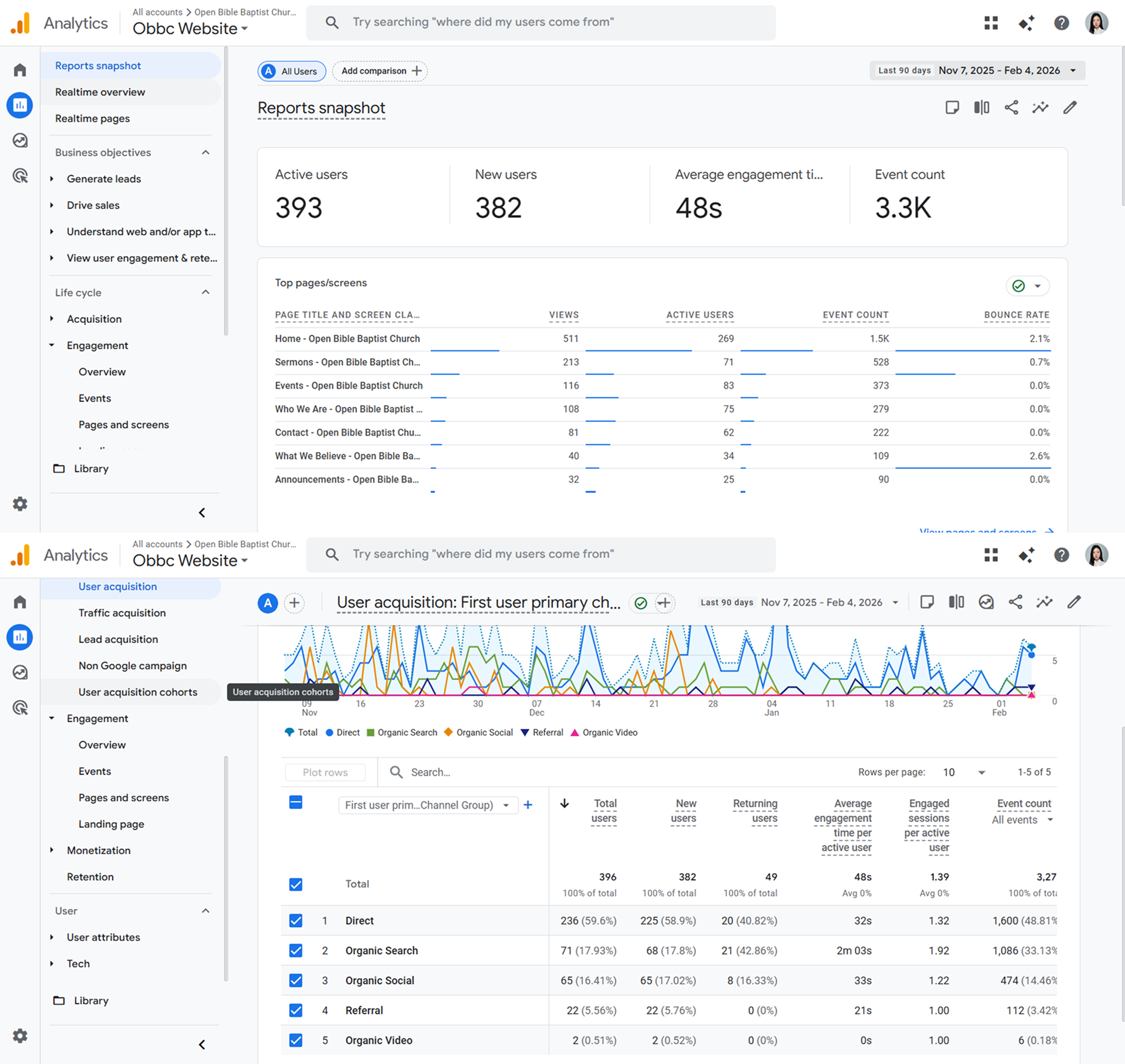
GA4 was implemented to track user behavior, engagement, and key actions across the site. Custom GA4 reports were created to analyze campaign performance, user location, and device usage, providing targeted insights that were not easily visualized in Looker Studio.
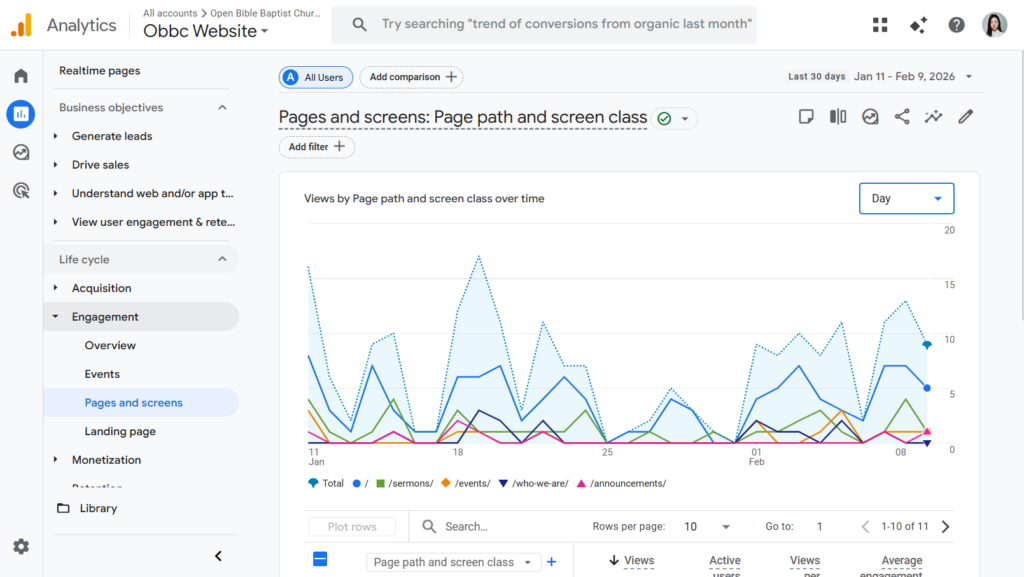
Pages and Screens

Google Analytics 4 (GA4) was set up to monitor how users interacted with the website. Key metrics were tracked to understand:

  • High-traffic pages
  • User navigation patterns
  • Engagement levels
  • Key actions such as contact form submissions.

This data provided insight into which pages were most valuable and where users were dropping off.

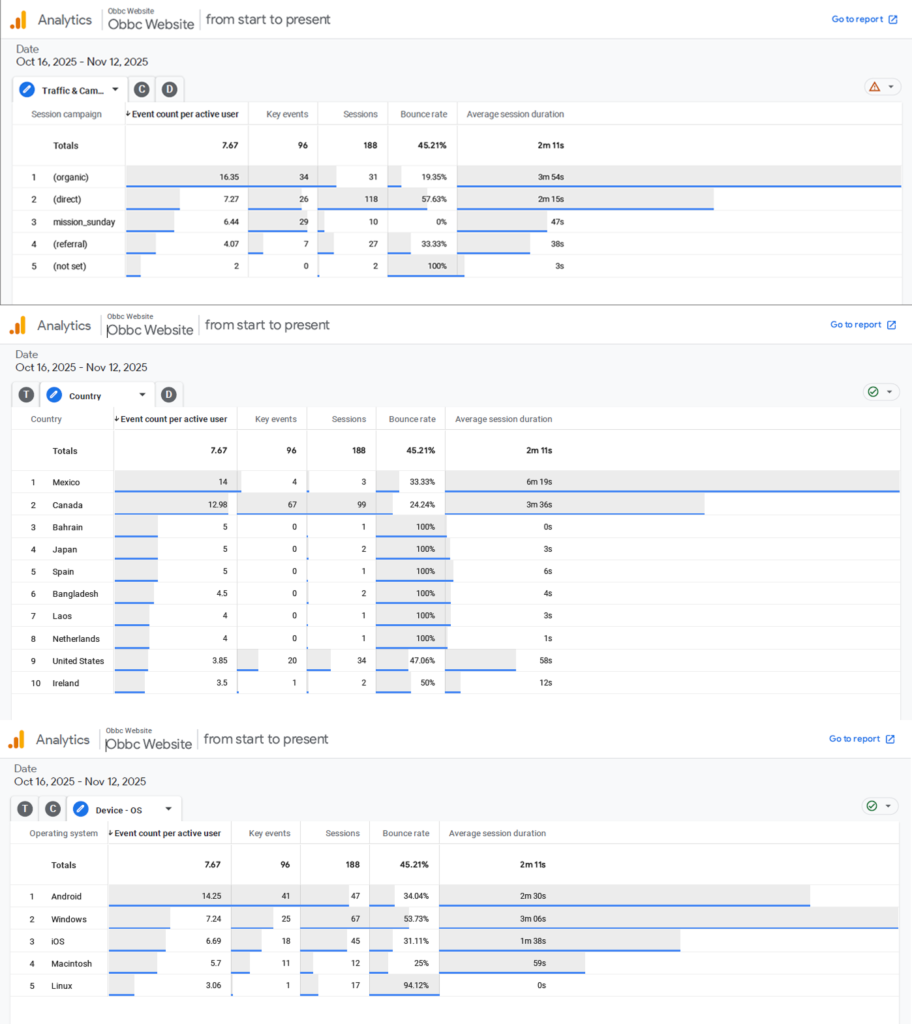
Custom GA4 Reports
Custom GA4 reports were created to monitor campaign performance, user location, and device usage.
The reports highlighted organic traffic as the most engaged source, confirmed Canada as the primary audience location, and identified Android, Windows, and iOS as the dominant platforms.

Reporting & Data Visualization

Facebook Campaign Performance Report

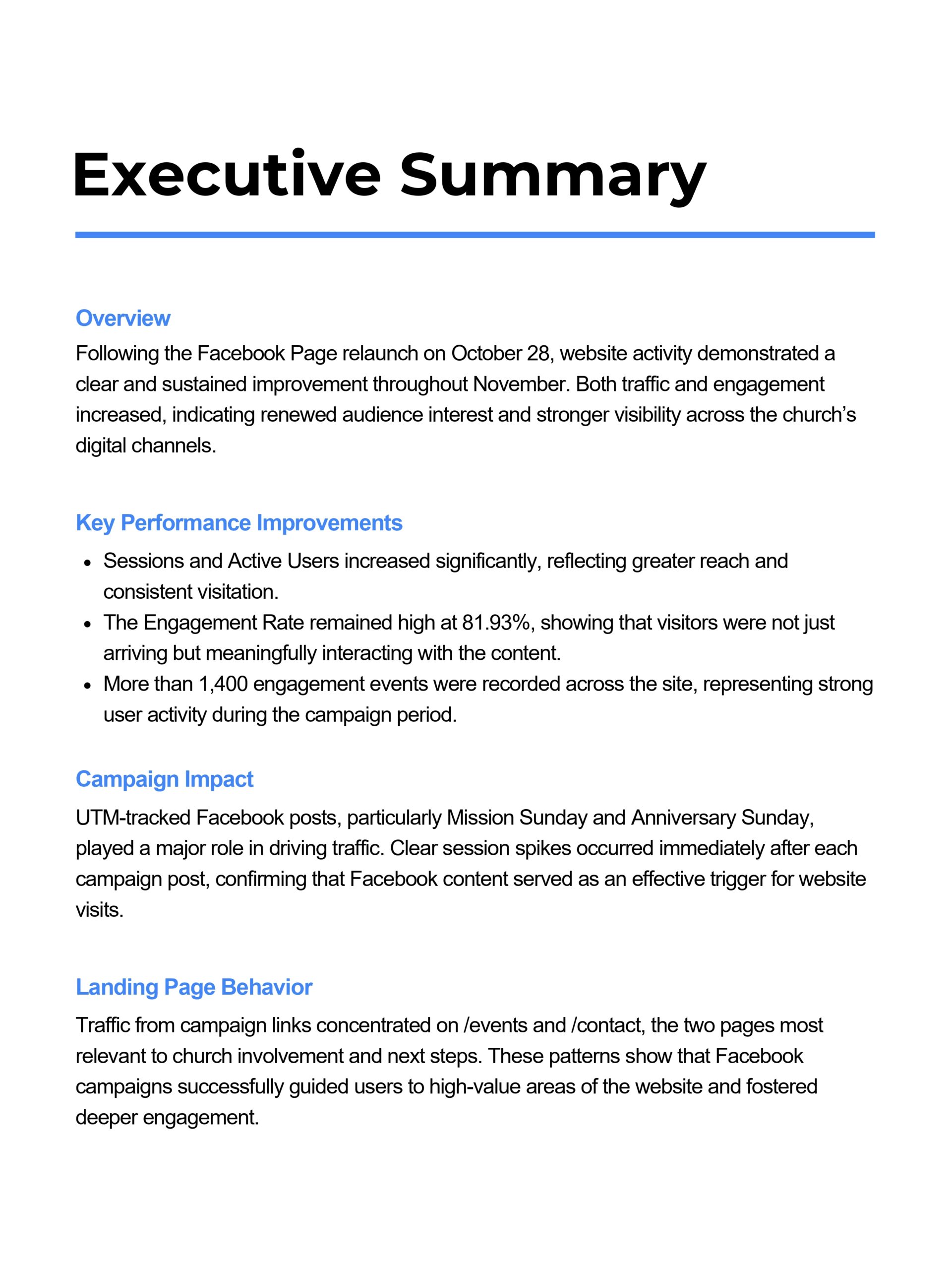
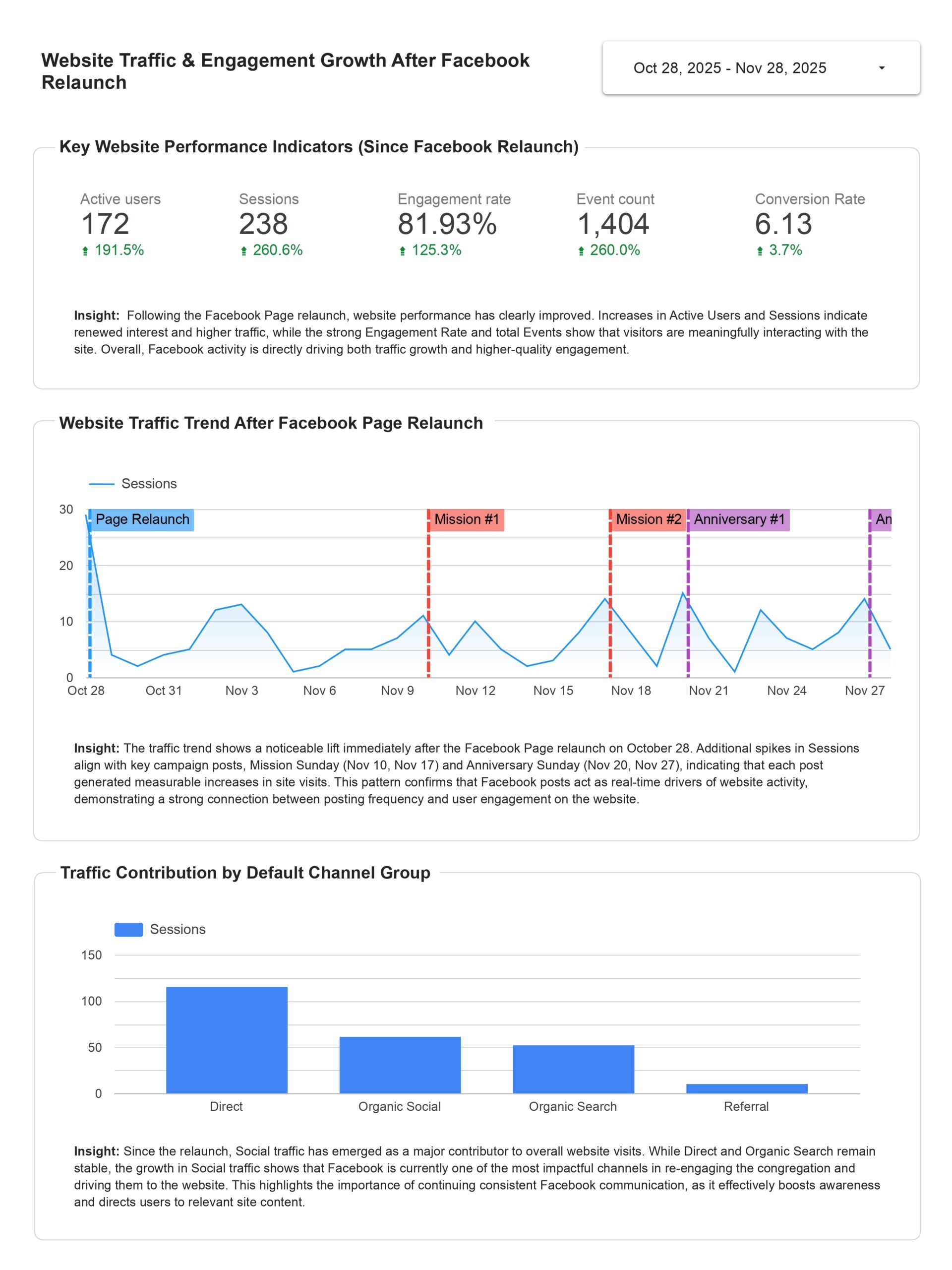
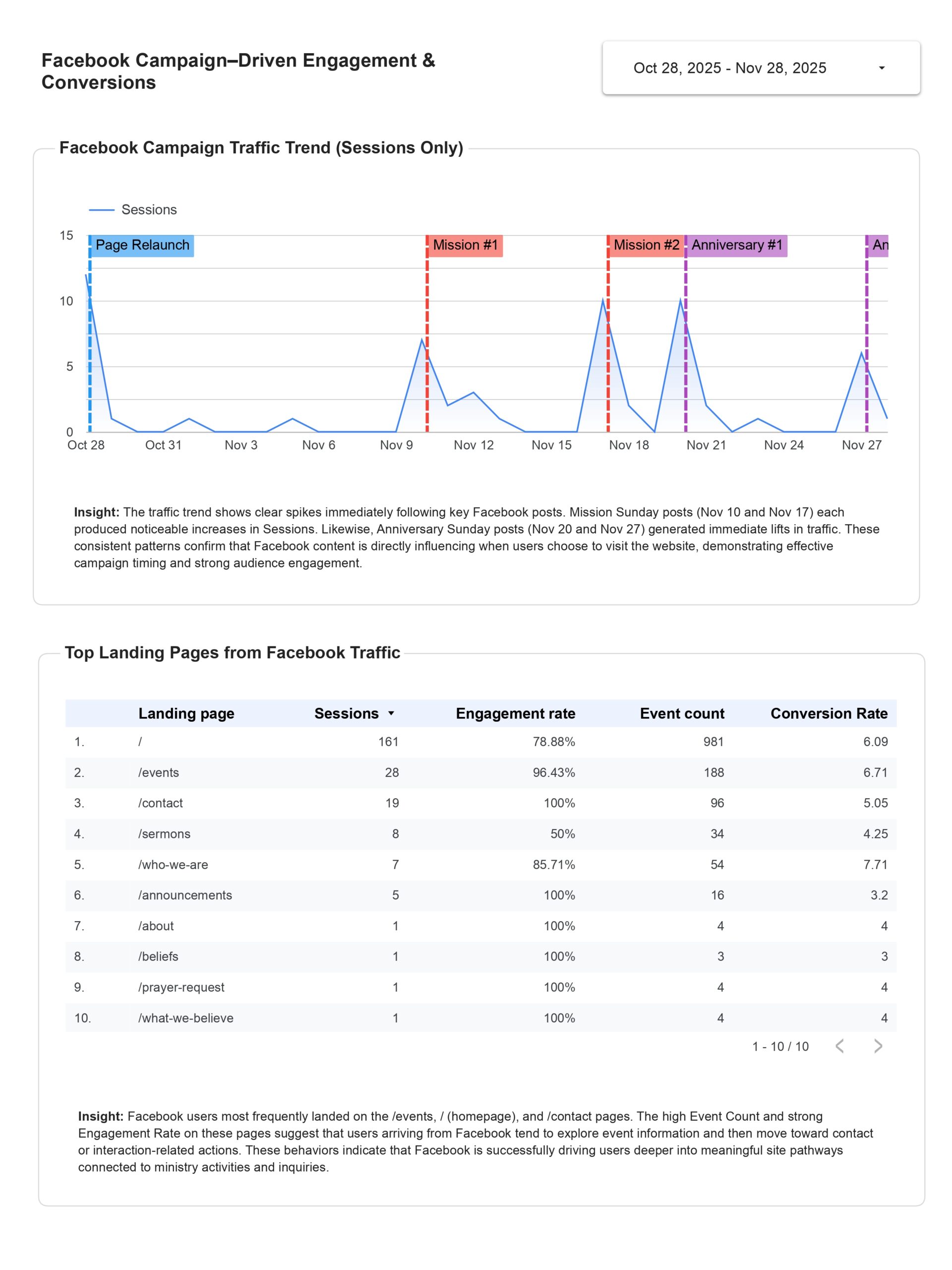
A campaign performance report was created in Looker Studio by connecting Google Analytics 4 data. The report analyzed the impact of the Facebook page relaunch and UTM-tracked campaign posts on website traffic and engagement.

The analysis revealed clear traffic spikes after major Facebook posts, significant increases in sessions and active users, and strong engagement on high-value pages such as Events and Contact, confirming that social content was effectively driving meaningful site interactions.

Project Summary & Key Takeaways

Project Summary
The OBBC digital platform project focused on rebuilding the church’s online presence into a clear, accessible, and engagement-driven communication system. The website was redesigned using WordPress and Elementor to simplify navigation, improve content structure, and support regular updates without requiring technical knowledge from church members.

A Facebook-first communication strategy was implemented to match the congregation’s platform preferences, while Google Analytics 4 tracking was introduced to monitor user behavior and key actions across the site. Performance data showed that social posts were directly driving traffic spikes and meaningful interactions, particularly on high-value pages such as Events and Contact.

Overall, the project transformed the church’s digital presence from a static information site into an integrated platform where website structure, social communication, and analytics worked together to support engagement and community participation.
Key Skills Applied
  • WordPress & Elementor Site Structure and Page Building
  • Website Navigation and Content Hierarchy Optimization
  • Facebook-Based Social Media Communication Strategy
  • Buffer Scheduling and Meta Performance Tracking
  • Google Analytics 4 Setup and User Behavior Analysis
  • Custom GA4 Reports for Traffic, Location, and Device Insights
  • Looker Studio Campaign Reporting and Data Visualization
  • Content Updates and Ongoing Website Operations
  • Visual Asset Creation for Announcements and Events
  • Data-Driven UX and Engagement Improvements